
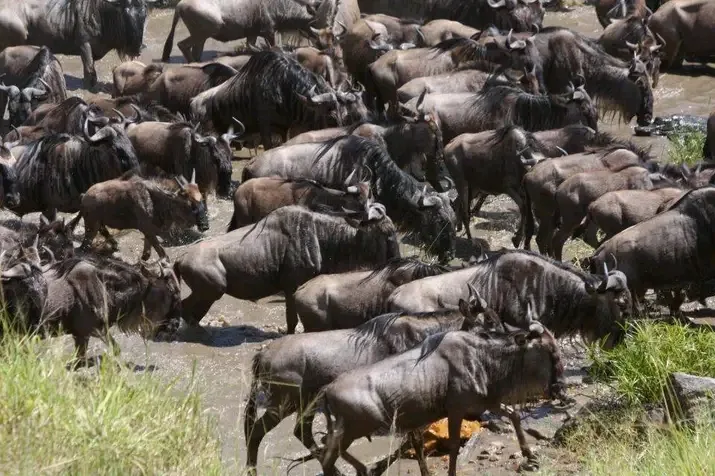
A Great Wildebeest Migration safari takes thoughtful planning because wildlife movements respond to rainfall, grazing and changing natural conditions. Choosing the right travel window matters, but so do the number of nights you allow, where you stay and how much flexibility your itinerary provides. A carefully planned trip gives you time to enjoy the Masai Mara without treating any single sighting as guaranteed.
Understand the seasonal movement
Wildebeest and other grazing animals move through the wider Serengeti–Masai Mara ecosystem as conditions change. The timing and concentration of animals vary from year to year, so broad seasonal patterns are useful for planning but cannot predict exactly where herds will be on a particular day.
If you have fixed travel dates, tell your safari planner what you hope to see and ask which area and itinerary make sense for that period. Keep expectations flexible because rainfall and animal behaviour can alter local conditions.
Allow enough time in the Masai Mara
A migration-focused safari benefits from giving yourself time in the destination rather than relying on a very brief stop. Multiple game drives across several days provide different opportunities to explore wildlife areas and respond to what your guide observes.
The appropriate length depends on your budget, overall holiday and other destinations you want to visit. Consider whether extra nights in the Mara would add more value than adding another region with additional transfer time.
Choose accommodation with location in mind
Accommodation affects more than comfort. Its location can influence drive times, access to different areas and the rhythm of each day. Compare the location, room type, meals, transport arrangements and any additional charges rather than choosing on photographs alone.
Ask your operator to explain how the proposed camp or lodge fits your intended route. Availability and suitability vary by dates, and some properties have specific policies for children or particular room arrangements.
Know what river crossings can and cannot be predicted
River crossings are among the best-known migration moments, but they are unpredictable natural events. Herds may approach a river and wait, change direction or cross when visitors are elsewhere. No responsible itinerary can guarantee a crossing at a specified time.
Plan for the broader wildlife experience, not only one dramatic event. The Mara offers other wildlife viewing opportunities, and your guide can help you make the most of the conditions encountered during your stay.
Balance the route, budget and travel time
Your total cost depends on travel dates, accommodation, group size, transport, park and conservancy charges, and the number of nights. Confirm what is included in a quotation and which costs remain separate.
If you want to combine the Mara with another Kenyan destination, check transfer times and the total days available. A route with fewer stops can leave more time for game drives and reduce the pressure of moving between camps.
Prepare a migration-focused safari request
Before requesting a quotation, decide on your preferred travel window, number of travellers, trip length, accommodation style and approximate budget. Mention whether you are primarily interested in migration viewing or want a broader Kenya safari as well.
Use the Kaswan safari planner to outline your dates, duration, group size and destinations. Your enquiry can then focus on a practical route and suitable accommodation for the time you plan to travel.
Start planning your Masai Mara migration safari
Share your intended travel dates, available days, group size and accommodation preferences. These details help shape a realistic safari request while allowing for the unpredictable nature of wildlife movements.
Because migration movements are seasonal but not precisely predictable, start with your dates and available nights. Use the planner to outline your Kenya safari and discuss a suitable Masai Mara itinerary. Plan your Great Migration safari.
YOUR SAFARI, YOUR WAY
Turn Your Ideas into a Kenya Safari
Share your travel dates, group size, destinations and preferences with Kaswan Tours and Safaris. We can help you work towards a practical itinerary for your trip.
Frequently Asked Questions
When should I plan a Great Migration safari in Kenya?
The migration is seasonal, but exact timing and location vary with rainfall and natural conditions. Share your travel dates with your operator to discuss suitable options rather than relying on a guaranteed date.
How many nights should I spend in the Masai Mara?
The right duration depends on your budget and overall itinerary. Allowing several nights can provide more opportunities for game drives than a short stop, while avoiding an overly rushed route.
Can a safari operator guarantee a river crossing?
No. River crossings depend on natural animal behaviour and changing conditions. An operator can plan a suitable itinerary but cannot guarantee that a crossing will occur at a particular time or place.
What should I compare when choosing a migration camp?
Compare location, dates and availability, accommodation, meals, transport, included activities, additional charges and the practical route to the wildlife areas you hope to visit.
Explore more guides in the Kaswan Safari Journal · Explore our safari options